2025 North American Barley Crop Report
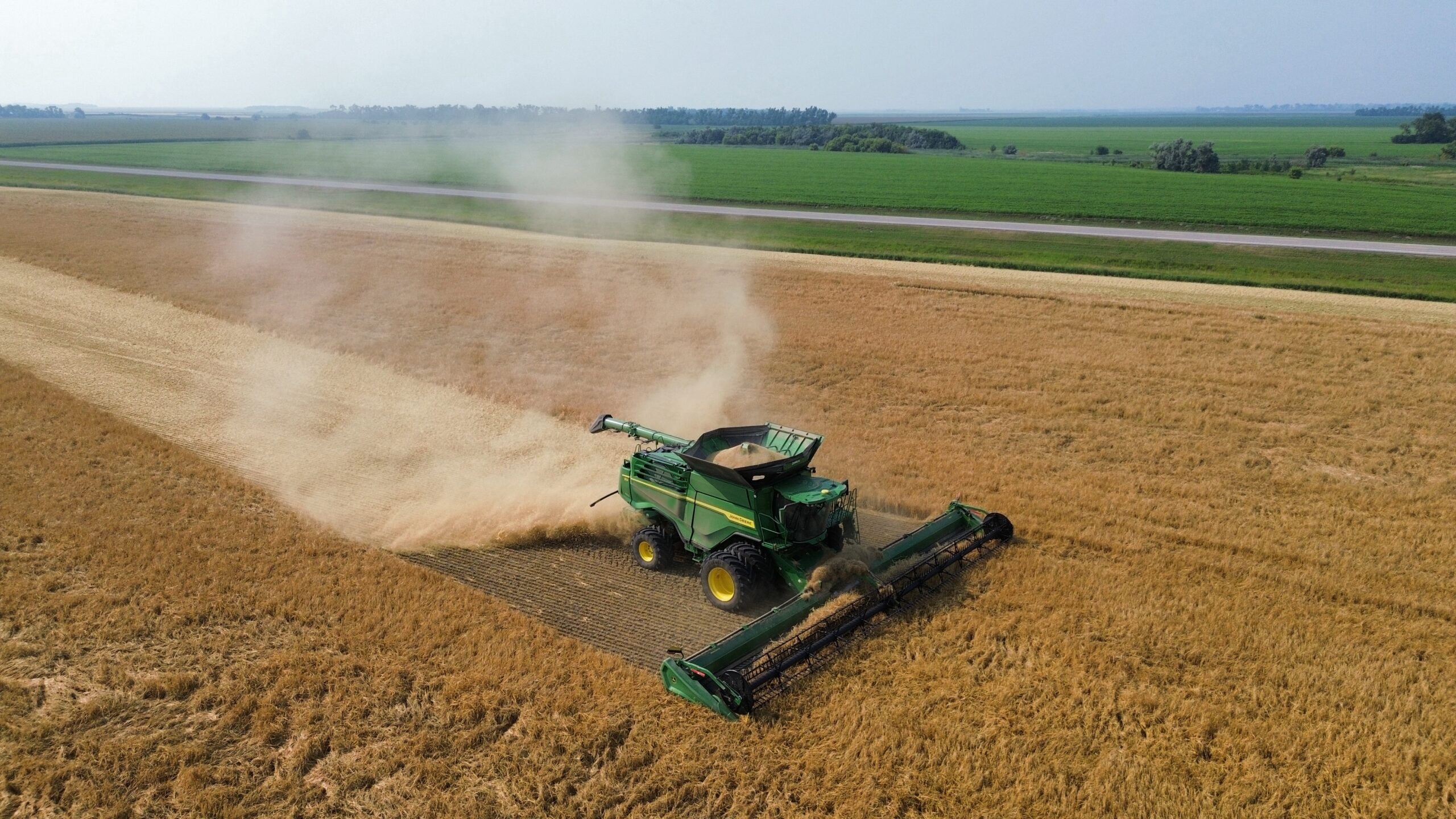
With this year’s harvest in bins or en route to malthouses, the agronomists and barley sourcing team at RahrBSG are here to share what they’ve seen this season and tell you what you need to know for brewhouse operations in the coming months. To cut right to the chase: the 2025 North American barley crop is bigger and better quality than expected. For all the grainy details, read on!
What makes a “good” barley crop?
Besides enough acreage to meet demand and quality malting genetics in the seed stock, a good crop needs
- Adequate soil moisture and on-time sowing in the springtime
- Adequate precipitation and sunlight hours throughout the the growing season
- Dry weather for ripening and harvest
Let’s look at how the 2025 crop did against these criteria:
Winter precip & springtime soil moisture – Canada & US
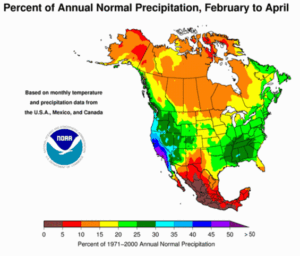
Adequate soil moisture ensures even germination. This year we saw overall low moisture during winter months, spring rains arriving in late April. By early May Canadian & US prairies had very good soil moisture levels.
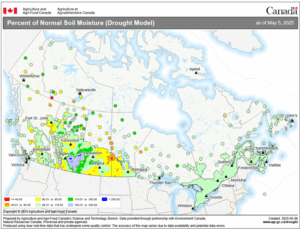
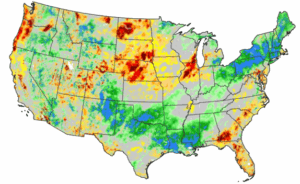
Soil moisture levels across Canada & the US in early May 2025
Early growing season – Canada
Spring rains ended quickly, with virtually no rain on the prairie from early May through mid-June. Dry conditions were coupled with high winds and elevated temps, stripping away surface soil moisture.
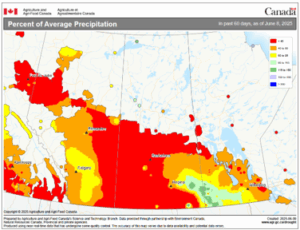
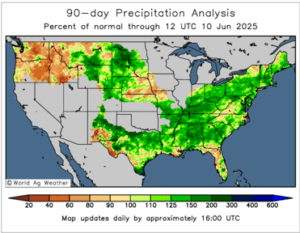
By late June, farmers were desperate for rain – expectation was for significant crop damage due to drought conditions. However, strong subsoil moisture established in April effectively saved the crop and carried it through the record dryness.
Early growing season – US
The US barley crop in North Dakota, Minnesota, and South Dakota is predominantly grown on dryland, relying on natural rainfall for development. Seeding was completed two weeks ahead of schedule. A timely rainfall immediately after seeding resulted in excellent emergence, enabling the barley crop to develop a robust root system and achieve uniform growth.
Late growing season – Canada
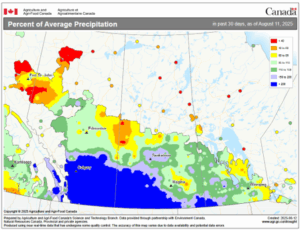
In mid-July rains came back and continued through mid-August at record levels. It was estimated that in some areas we were ~72 hours away from heavy crop damage. Concern began to develop about the possibility of crop damage due to lodging (crops laying down due to rain & wind), and possible chitting (pre-germination).
Late growing season – US
Midway through the season, Canadian wildfire smoke entered the region, rainfall decreased, and soil conditions gradually became drier. However, the conservation practices employed by Rahr growers, combined with the presence of wildfire smoke, helped retain soil moisture, supporting the crop’s performance and maximizing the benefits of limited precipitation.
Harvest & quality outlook – Canada
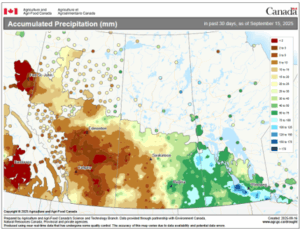
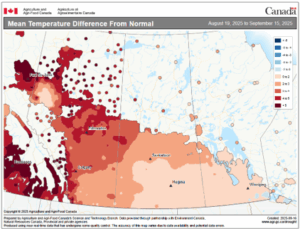
Mid-August saw the return of dry, warm conditions across the western prairies (2/3 of the crop)– perfect conditions for ripening.
The eastern prairies (1/3 of the crop) saw continued rains and will likely see some issues with chitting and fungal contamination.
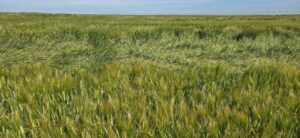
Early indications are for a very good quality crop: the heat and dry conditions in early summer did damage some acreage in Central Saskatchewan, but indications are that it was not as severe as expected.
In general, the 2025 crop is showing lower protein than prior years with excellent yields at the farm: Up to 140 bushels/acre (vs nominal 90) in Alberta and Western Saskatechwan. The barley is showing very good plumps; while there is some chit, it is minimal and not a quality risk.
Overall, the 2025 crop is larger than expected, better quality than expected earlier in the summer, and of higher quality than we have seen in Canada in recent years
Maltsters will benefit from this years crop and will likely select at least 16 months of supply as a hedge for 2026 crop.
Harvest & quality outlook – US
Overall, Rahr Shakopee’s barley production for the 2025 crop season looks promising. Yields are expected to be average to above average, with the potential for high-quality barley.